
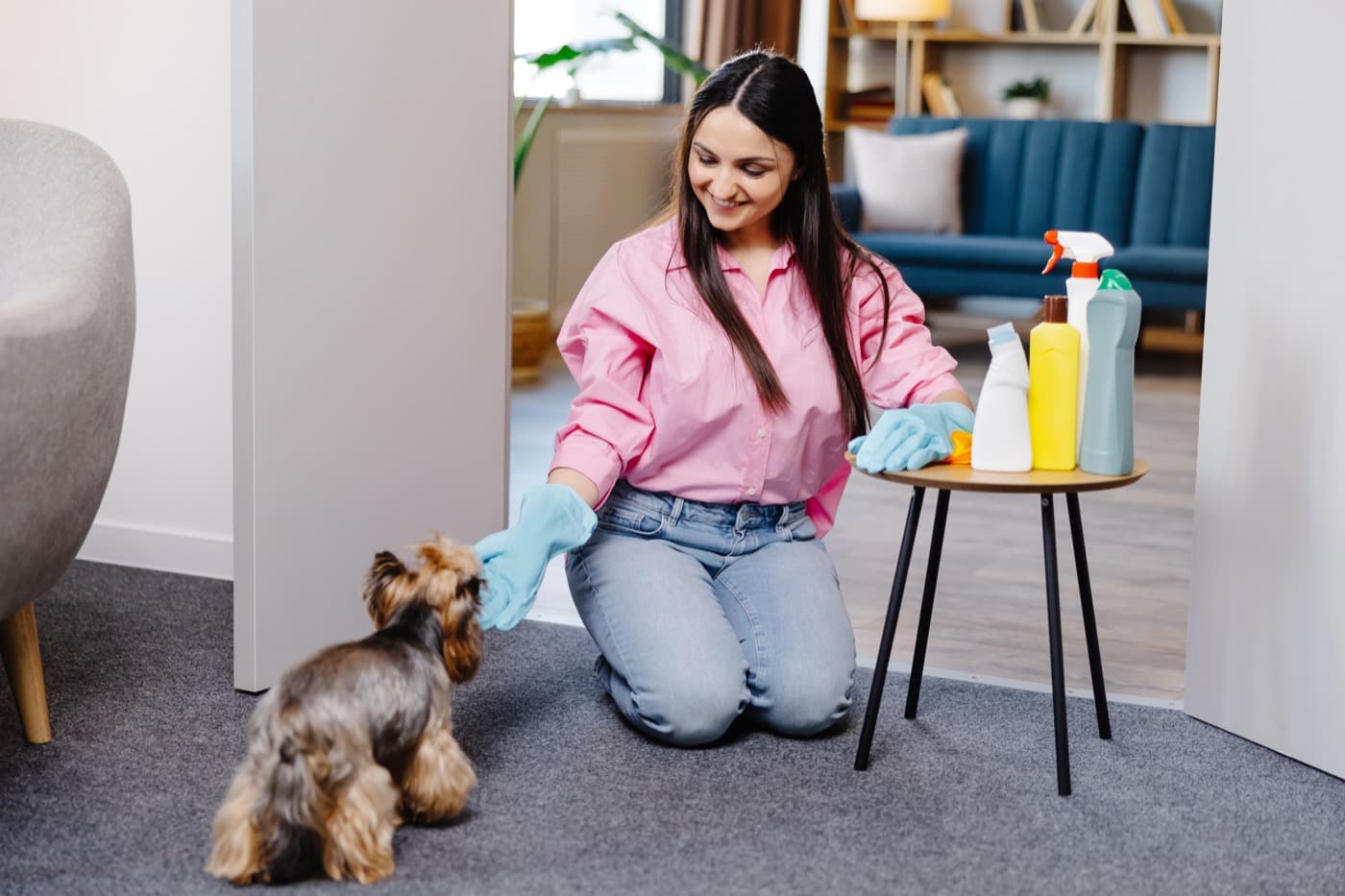
If you share your home with a dog or cat, the surfaces you clean are not an abstract concern, they are literally where your pet spends most of its day. Floors get walked on with bare paws and then licked clean. Furniture gets chewed. Bedding gets slept in for hours at a stretch. That level of direct contact is exactly why product choice matters more in a pet household than it might in a home without animals.
Why pets change the cleaning equation
A person walking across a freshly mopped floor in shoes has very little direct skin contact with whatever was used to clean it. A dog walking across that same floor barefoot, then licking its paws a few minutes later, has a lot more. Cats are arguably worse in this respect, given how much time they spend grooming themselves after contact with any surface in the home.
What to actually avoid
- Ammonia-based cleaners, which can irritate a pet's respiratory system, especially in cats
- Undiluted bleach, particularly on floors pets walk and lie on directly
- Heavily fragranced products, including some essential-oil-based cleaners that are marketed as natural but can still be irritating or, in specific cases, toxic to pets
- Harsh floor polishes or waxes that leave a residue paws will pick up and track
Problem areas most owners overlook
Litter boxes
The box itself needs regular deep cleaning, not just scooping, and the floor and wall area immediately around it accumulates dust and odor that a general room clean often misses.
Pet bedding and furniture
Pet beds, blankets, and any furniture pets are allowed on hold onto dander, fur, and odor at a much higher rate than the rest of the room, and need more frequent attention than a standard weekly clean typically gives them.
Accident spots
A general wipe down does not fully remove odor from a pet accident, since residue can sit below the visible surface, particularly on carpet or grout lines. These spots need to be targeted directly, not just cleaned in passing.
What we do differently in pet households
Our standard cleaning already uses eco-friendly products by default, chosen specifically to be safe around kids and pets while still holding up to everyday grime. In homes with pets, we pay closer attention to floors, pet bedding areas, and any specific spots a client flags, rather than treating the whole home as uniformly low-risk.
Between professional visits
- Wipe paws at the door during wet or muddy weather to cut down on tracked-in dirt
- Wash pet bedding weekly if possible, since it holds onto odor and dander fast
- Vacuum pet hair from furniture a few times a week rather than letting it build up
- Keep litter boxes scooped daily, even on a schedule with less frequent full cleaning